Group Leader: Peter Leeson
| Status: | Active, open to new members |
| Group email: | Book Discussion group |
| When: | Monthly on Thursday mornings 10:00 am-11:30 am 3rd Thursday of each month |
| Venue: | Vermuyden Meeting Room |

If you read books, this is the group for you.
The Book Discussion Group meets on the third Thursday of the month from 10:00am to 11:30am at Chatteris Library (Vermuyden Room).
Come and tell us about a book you have read and whether you enjoyed it or not, and why you think other people should read it, or maybe they should not. Come and hear about books other people have read and possibly enjoyed, and perhaps discover a new author, genre or book that you would not have picked up spontaneously, but does sound interesting.
April 2026
We didn't meet in March because of mix-up with room reservations. As a consequence, we ended up with a few more books than usuual.
Bob Mortimer's sequel to the previously discussed "The Satsuma Complex" is the Hotel Avocado - strongly recommended for the any amateurs of crazy comedy.
Another comedy giant is the uncomparable Ronnie Barker whose biography reminds us of all the things that made him unique in British comedy.
Making it So is Patrick Stewart's memoirs of a life in show-business and in particular the many years that he spent being Captain Picard in the Star Trek series.
Operation Heartbreak and The Man Who Never Was complete one another to bring the facts to "Operation Mincemeat", the bizarre idea to drop a corpse in a military uniform and pockets full of secret documents in the Mediterranean, expectin the Germans to pick it up and be fooled into believing that the allies were preparing to invade Greece rather than Italy. The idea was ridiculous, the planning meticulous, the result miraculous.
The Weekend is a reminder of the terrorism propagated in Germany by the Baader-Meinhof "Red Army Faction". It is a work of fiction in which some of the perpatrators meet up again after a few decades and prison sentences and compare their memories and beliefs.
Murder at the Monastery and The Suspect are two books that prove that some television celebrities can do things other than clowning about in front of a camera. Comfy crime, well structured and written
Less comfy is Mirage, the concluding third novel by Camilla Lackberg and Henrik Fexeus, following the story of a detective and a mentalist working together to solve riddles in which everything is not as it seems.
Duffy is the first in a series of gritty police stories set in London written under a pseudonym by Julian Barnes, in which he completely ignores his high litterature tradition to delve into the seedier side of life.
Small Boat is a flow of consciousness book related to a coast guard phone operator who did not send help to a small boat of migrants crossing from France to England.
Ordinary Saints - or how a modern girl copes with the idea that her brother has been selected by the Roman Catholic church for sanctification.
Beneath the Skin is an easy-read suspenseful story of three women and a murderor.
Back Home, another easy-read, tells the story of a woman struggling with two identities (American and English).


February 2026
Another mixed bag of books this month, including some cosy crime, biography, research, historical, and the return of Janice Hallett...
Biographies included:
- Alan Alda, the 1983 biography. A review of the life and times of the actor best known as Hawkeye in the TV series M*A*S*H, but he is so much more than that.
- Helen Forrester's memoirs (4 volumes) born into complete poverty and struggling through an apparently doomed life.
- Under the Ivy is the story of Kate Bush, singer, actress and global success story. This is possibly the antidote to Helen Forrester.
- Diddly Squat, the Farmer's Dog, is the continuing story of Jeremy Clarkson and his farming discoveries.
Research books included:
- The Anxious Generation brings together the research and statistics on the impact social media and smartphones have on young people.
- Art Cure explains the benefits of engaging in the arts (music, knitting, drawing) on our mental and physical health.
Fiction included:
- Drive your Plow Over the Bones of the Dead, an extraordinary Polish story, winner of the Nobel prize of litterature.
- Seven Dials, an Agatha Christie book republished and transformed into a mini-series on Netflix, allowed us to compare and contrast the two formats
- Dean Koontz's "Relentless" and "the Fun House" are thrillers that are sometimes quite violent but always exciting.
- Alperton Angels has been covered previously - see July 2025 for more.
That leaves two books that fall in between the categories. In both, it is difficult to distinguish what is biographical, what is fictional and what is research-based.
- Small Boat, translated from "Naufrage", is based on a true story of a boat of refugees that capsized while crossing the Channel. It tells the story from the point of view of the lifeboat rescue service that did not come to their help and gives some context to why this tragedy was allowed to happen.
- Departure(s) is the last (and obviously latest) book by Julian Barnes. He quotes that it is a novel, but that doesn't mean it is not true. Some elements of the book are definitely autobiographical, but it is hard to determine where they end and when the fiction takes over.


Author of the Year

Janice Hallett
January 2026
This was possibly the first group meeting since the group's start in which no book by Janice Hallett was mentioned (though there was a quote of hers on the back cover of one book).
This Way Up: When maps go wrong (and why it matters) is the very clever and amusing book by the "Map Men" (Jay Foreman and Mark Cooper-Jones) explaining various historical errors, omissions and flaws in map-making and the consequences these continue to have in the three-dimensional world. If you know their brilliant YouTube channel, you will know you're in for a treat.
Marble Hall Murders by Anthony Horowitz is the third novel in a collection that has been turned into a BBC series for television; previous volumes were Magpie Murders and Moonflower Murders. This is a "cosy crime" novel written by an author of great talent.
My Life by David Jason is the autobiography of the celebrated actor, brother of the actor Arthur White, who inherited from Ronnie Barker the title "King of Comedy". An actor's life story, including financial struggles and his career as an electrician, moving on to work with some of the all-time British stars in Porridge, Open All Hours, the Darling Buds of May and, of course, Only Fools and Horses.
A Northern Soul by Jimmy Nail is the life story of young Jimmy, a hoodlum who was expelled from school, did a stint in Manchester Prison and went on to become a country singer as well as the leading star in Auf Wiedersehn, Pet, sharing the stage with Madonna in the musical Evita, and more
Guilty by Definition by Susie Dent is a mystery novel, situated in the world of lexicographers (as one should expect from the prolific Ms Dent). Two readers in the group read this and came away with very different opinions on its merits. Susie Dent is known for her knowledge of words, and the reading of a novel by a definition expert may present challenges due to the extensive vocabulary used.


December 2025
Another varied selection of books, including some that are returning, as another participant has been encouraged to read them at a previous meeting -- and that is what a book group should be doing, recommending books that you might not have picked up yourself. Among those books that were recommended previously and came back, we had "The Satsuma Complex", which got a good review last month, but this month, another member did not appreciate it at all. "The Survivors" was read by a third person, who gave it a good review; a new member discovered Janice Hallett and, after some hesitation, really got into "The Examiner" and enjoyed it.
This month, among the new books, we had some that were strongly recommended and others less so, as one would expect. Preferences and tastes vary between participants.
Two separate books by Christy Lefteri were read by two different members ("The Beekeeper of Aleppo" and "The Book of Fire"). Both were appreciated and recommended. If you're interested in cricket, Stephen Fay and David Kynaston have written a good book about two of the legendary test match radio commentators and how they impacted a changing sport.
In Science-Fiction, we had "The Andromeda Strain" and "The Day of the Triffids", both of which were made into successful films a few decades ago. Both these books come strongly recommended.
Two books fit in different ways into the History section: "The Aviator's Wife" tells the story of the wife of Charles Lindbergh and how this gifted pilot was largely written out of history as just being the wife of the hero. "Beyond the Call of Duty" is the story of different animals who received the Dickin medal in war.
Two different novels by the same author were discussed: "Everyone In My Family Has Killed Someone" and "Everyone This Christmas Has a Secret" (actually a novella) by Benjamin Stevenson. The "family" one comes more highly recommended than the "Christmas" one. These books are identified as "darkly hilarious".
Another novella was "Box Hill", a disturbing account of an abusive relationship told from the point of view of the willing victim. That leaves Pedro Almodóvar's "The Last Dream", a series of semi-autobiographical short stories, some of which are related to his personal life, others are the precursor to some of the great man's films.


November 2025
What I most enjoy about the Book Discussion Group (BDG?) is the variety of people, books and topics that intermingle. We have readers who enjoy "cosy crime", in science fiction and space exploration, in "pulp fiction", factual and historical, and thrillers.
We come together and present some things we have read, recommend, and lend books to each other. There is no judgement, no questions, tell me what you read, whether you enjoyed it or not and why I might want to read it as well. Some of us like hardbacks, some read paperbacks, and some read e-books (admittedly, most of us are more interested in the contents than the format).
We mention books that we enjoyed, but also books we did not enjoy - this month we had a book that a member read because another was so happy with it last month, but the two readers had very different opinions. Some of us stop reading because of the language or grammar, some because none of the characters are relatable or likeable.
When we find a book we like, some delve deeper and start reading other books by the same author with more or less success, while others consider the thousands of books and authors they have not yet read and seek variety at all costs.


Books discussed
- Space Race (Deborah Cadbury)
- Carrying the Fire (Michael Collins)
- The Right Stuff (Tom Wolfe)
- Crooked Cross (Sally Carson)
- Man's Search for Meaning (Viktor Frankl)
- The Only Story (Julian Barnes)
- The Granddaughter (Bernhard Shlink)
- The Silence in Between (Josie Ferguson)
- Archangel (Robert Harris)
- Moderation (Elaine Castillo)
- The Satsuma Complex (Bob Mortimer)
- Eats Shoots & Leaves (Lynne Truss)
- The Killer Question (Janice Hallett)
- The Survivors Alex Shulman


Surely something in this list will please you because it will be hard to find a book reading group that offers more variety in what they cover!
October 2025
We had quite a large turnout this month - perhaps that is related to the very low turnout (that led me to cancel last month's meeting) playing out against the law of averages. We tried something new this month, asking the person who brought in the book to give it a rating out of ten. This is very personal and subjective; when someone else had read the book, they did not necessarily agree with the score given - so please take it with a pinch of salt... I just thought it might give me a way of highlighting the most recommended books...
10 - Strongly recommended by the reader
The Mysterious Affair at Styles (Agatha Christie) is the first story featuring Hercule Poirot. A good suspense novel in which Christie can enjoy her knowledge of poisons and how to use them (she worked in a hospital dispensary during the wars).


9 - Good Reads, recommended
The Elements (John Boyne) includes of four interrelated standalone novels rotating around family relationships and the impact of child abuse.
Salt Water Mansions (David Whitehouse) relates the true story of a journalist seeking to understand the disappearance of a person and the impact she had on her neighbours and relatives.
A History of the World in 47 Frontiers (John Elledge) is a narrative of frontiers and borders around the world and how they impact wars and international relations.
Midnight and Blue (Ian Rankin) John Rebus, a detective in prison investigates a murder in the prison


8 - Worthwhile books
Alan Turing (Andrew Hodges) is the biography of the brilliant mathematician and code-breaker.
1984 (George Orwell), the dystopian future in which history can be rewritten daily and the government has complete control of what you think.
Alien (Alan Dean Foster) is the novelisation of the film, adding context and backstory to one of the most famous sci-fi films.
The Last Chairlift (John Irving) relates the story of a ski instructor researching his origin story and uncovering his past, his mother's story and some surprising ghosts.


7 - Enjoyable books
What You Are Looking For Is In The Library (Michiko Aoyama) is a collection of stories about different people visiting a library. The focus of the stories is that you don't always find what you want where you would expect.
Good as Dead (Mark Billingham) is a well-written, fun detective novel. A nice bit of escapism.
The Black Loch (Peter May) is a disappointing epilogue to the Lewis trilogy, which requires you to read the first three books to understand all the flashbacks.
Strange Sally Diamond (Liz Nugent) is a good book about a woman living with her adoptive father and trying to find out about her childhood and the abuse that led her to where she is in life.
Smoke and Ashes (Abir Mukherjee) relates a crime story set in the dog days of the Raj, including a strong commentary on British rule. The characters often appear stereotyped


5 - Readable books
Hunted (Abir Mukherjee) was described as "action thriller junk" and a "quite readable" story about a bombing in a US shopping mall and the politics thereof
Zero - Bah
The Twyford Code (Janice Hallet) is another one of the epistolary novels, this one based on a series of audio files. It was not at the same level as her other books, which we have previously discussed.
XX (Rian Hughes) is an experimental book that includes intertwined topics and artefacts that progressively build on each other. Too complex for this reader.


August 2025


We had a good turnout for our August meeting. It was also nice to see that some of the books we discussed are appearing on the book table at the u3a, making them more accessible to others. It seems (to me) that we are having more books covered every time...
The Correspondent, an epistolary novel by Virginia Evans, got a very positive review. It includes a series of letters written, sent, and received by a woman. One set of letters is never sent, and the reason unfolds throughout the story.
The Sleeping Children by Anthony Passeron is a French story about a historical medical mystery, alternating chapters on the personal trauma of one family and the international struggle to combat a disease that had been believed to be eradicated.
The Fury by Alex Michaelides is an "Agatha Christie" style story of 7 friends isolated on a Greek island and being murdered, one by one. A good suspense story.
The Daughter of Time by Josephine Tey is a modern take on a historical novel, as an injured detective decides to take his hospital time to solve mysteries surrounding Richard III and the princes in the tower with some help from scholars and the British Museum. Perhaps a little old-fashioned in its writing (it was written in the 1950s).
Black Dogs by Ian McEwan is a strange book in which the narrator tries to understand the history of his parents-in-law, a communist and a Christian, and what happened to them when they met some black dogs while on holiday in France
Holly by Stephen King is a detective story and does not contain the supernatural aspects that characterise so many King novels. It is a good thriller.
Another Nice Mess by Raymond Valinoti Jr covers the two characters that made one of the most successful and loved comedy duos of all time: the lives and times of Stan Laurel and Oliver Hardy.
James and John by Chris Bryant describes in frightening detail life in the 1830s when you were not in Downton Abbey but trying to survive. It explains a harsh justice system in which a wealthy man could get away with raping a child, while poor people could be hanged for stealing five shillings. Very well researched!
The Children's Nurse by Susan MacQueen covers the life of a nurse at Great Ormond Street Children's Hospital in the 1960s to 1980s. A moving story about the progress of healthcare and more.
Agatha Christie by Lucy Worsley describes a thoroughly modern woman doing things that were not usual for women, her struggles, her talent and her modesty.
We Solve Murders by Richard Osman is a comfortable thriller, well written, and an easy read.


We had quite a number of books relating to science, space and science fiction this time, so that justifies a separate paragraph for them.
Snow Crash by Neal Stephenson was written in the 1980s and discusses what comes after the internet. In an amazingly prescient novel, the author created the word "metaverse" (which inspired many others, and is the origin of the corporate name of Facebook), describes artificial intelligence and imagines virtual reality games. The outcome is not necessarily rosy...
XX by Rian Hughes is a novel like no other. Set in today's world, the novel describes a communication from outer space that starts to take over the world. With a taste of what is happening today with social networking and AI, we read about computer-generated characters that represent the "ideal" (or the average) person as perceived in different centuries and how they interact with living humans and the interstellar communication network.
The Book of the Moon by Dr Maggie Aderin-Pocock is a science book explaining some of the facts and features of our satellite. It covers the importance of the moon, without which life would probably not be possible, its composition and some of the theories regarding its origin.
Exterminate! Regenerate! by John Higgs is a history of the Dr Who television phenomenon, from its creation to the latest series. It covers the stories of the various key creators and executives who tried to run the show or tried to cancel it. It also talks about the topics that are covered in the various stories and how elements became successful or failed completely.
July 2025
For our July 2025 meeting, another large crop of books to discuss and recommend...
The Mysterious Case of the Alperton Angels by Janice Hallett appears more complex and intricate than the other novels we have already discussed (The Appeal, The Examiner...). This can become an obstacle, particularly in an epistolary novel.
The Crooked Cross by Sally Carson and The Nazi Mind by Laurence Rees both cover the rise of the Third Reich from different perspectives. While the former discusses how it affects a particular family living through the experience, the latter applies modern psychological theories and techniques to explain how it was possible and what steps were taken to make the nightmare a reality. Rees's book is subtitled "12 warnings from history" and leads us to make comparisons with current political trends and statements.
Those who are Loved by Victoria Hislop covers the history of Greece from the 1930s to the present day through the eyes of a family.
Solito by Javier Zamora is the autobiographical account of a nine-year-old who had to flee life in San Salvador and walk through South and Central America to rejoin his parents, who are undocumented migrants in the USA - "should be required reading", says one reader
The Names by Florence Knapp examines the impact a person's name can have by telling three versions of one child's story, depending on which of three names his mother chooses when registering the birth.
Apollo 13 by Jim Lovell and John Glenn, a memoir, provide first-hand narratives of two men who decided to risk everything to become astronauts and how they became global heroes by surviving and succeeding in what seemed like impossible situations.


The group also discussed other books and, in particular:
- The author Josephine Tey, about whom very little is known, but has a fascinating reputation.
- The Edge of Darkness, which most remembered as a TV series rather than a book,
- Persephone Books (https://persephonebooks.co.uk/), a publisher specialising in 20th-century books by women.
June 2025


In June, we had some repeats from previous months as different people read books suggested by others and spoke of what they liked or didn't like about them. Janice Hallett's style continues to create discussions as the idea of an epistolary novel constructed from a series of emails and text exchanges with no narrative to link them together is daunting for most, but thoroughly enjoyable to those who took the plunge.
David Duker, who spoke at the Chatteris open meeting recently, appears to have been appreciated by those who purchased his book.
Conclave by Robert Harris was also appreciated and recommended. Of course, this book came to prominence recently when the film based on it was widely watched during the recent papal conclave. It offers a fascinating insight into the procedures of the Catholic Church and the diverse psychological make-up that forms the College of Cardinals. It is also a good, suspenseful who-done-it.
Hugh Laurie's "The Gun Seller" and John le Carré's "The Night Manager" both cover similar topics of spies and weapons, but are very different. Personally, I did not enjoy le Carré's book as much as Laurie's version.
Arthur C Clarke's "2010" is the sequel to the very well-known novel and film "2001: A Space Odyssey" which fans of science fiction still consider to be one of the best in the genre.
We also had a discussion about the fact that we appreciate and desire different types of books depending on the time of day and our mood. Sometimes, we want something serious, something we want something trashy that can be read and thrown away. Not always highbrow, not always lowbrow!
Again, I find myself with several books added to my own personal list of "to be read"...
May 2025
Perhaps it is the curse of this approach, maybe it is the proof that it is working. As we do not ask you to read a book for the meeting, but encourage participants to talk about things they have been reading and recommend (or not), most of the books this month appear to have been books that we discussed last month: "you said it was good, I read it"...
The books that were mentioned with positive comments and reviews included:
- The Meaning of Life by James Bailey and others: a collection of letters written by artists, politicians, activists and other celebrities about what they considered to be the meaning and value of life in general and their life in particular;
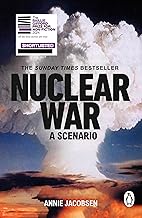
- Nuclear War - a Scenario by Annie Jacobsen: a scientific description of what would happen from the moment a nuclear missile is launched at the United States;
- The Appeal and The Examiner by Janice Hallett: epistolary novels structured like a succession of emails and messages between the main characters, leading to a very special structure in which you understand more about the motivations and needs of each individual involved;
- Human Traces by Sebastian Faulks: the story of two men at the turn of the XX century working in understanding the science of psychology;
- Turbulence by David Szalay: a short book telling the stories of a number of people who happen to be flying on the same plane and how their stories link together;
- A History of the World in 47 Borders by John Elledge: key international borders and frontiers that shaped the world as we know it, and how or why they are shaped the way they are.
On a less positive note, Fourteen Days is a collection of stories by well-known authors around the isolation of Covid, Those who had read it found it disappointing.
Other books were mentioned as things that some of us wanted to read, and perhaps will be discussed more in our next meeting...


April 2025

Alan, Margot, Pauline, Peter and Phil brought a wide selection of books to discuss on April 17th. These included murder thrillers like the books of Janice Hallett, historical stories like the story of Operation Mincemeat (written by one of the people responsible for this WW2 success story), Boris Johnson's memoir, and the history of the world as told by borders and frontiers. Turbulence and the Blessed Child represented "light" fiction, while "A Month in the Country" retold the story of religious intolerance and redemption,
An eclectic mix, in which we all noted books to read.




Our next meeting will be on Thursday, May 15th, and will be held at Phil Green's house. The library was already booked at our meeting times in May and June, and Nana's tea room is too noisy to have an appropriate discussion. Get in touch if you need details or a lift.
March 2025
Our first meeting, a little later than planned due to the refurbishment of Nana's Tea Room, finally took place on the 20th of March. Six members attended, and several apologised for not being able to make it. Alan, Gabi, Grant, Lynne (not pictured), Peter, and Phil discussed books that they had recently been reading or that were close to their hearts.
These included:
- Atlas Shrugged (Ayn Rand)
- Careless People (Sarah Wynn-Williams)
- Cult (Camilla Lackberg & Henrik Fexeus)
- Great Britain? (Torsten Bell)
- The Various Haunts of Men (Susan Hill)
- Turbulence (David Szalay)
- Trapped (Camilla Lackberg & Henrik Fexeus)

The group also talked about their appreciation of books by Colin Dexter (Morse), Agatha Christie (Miss Marple), Fred Secombe, Cannon Hall Farm and the Nicholson family, Susan Grossey, and Jo Nesbitt.
Because of the background noise in a crowded tearoom, it was decided that the next meeting would be held in a better location (the library?) on the 17th April.